
The Ultimate Guide to AAAHC Accreditation: Everything You Need to Succeed

Ambulatory surgery center administrators face increasing pressure to demonstrate quality and compliance. AAAHC accreditation stands as the gold standard for outpatient facilities seeking national recognition. This AAAHC accreditation guide covers requirements, common challenges, and actionable strategies for success.
What Is AAAHC Accreditation?
The Accreditation Association for Ambulatory Health Care (AAAHC) was founded in 1979. The organization focuses exclusively on outpatient facility accreditation. AAAHC uses a peer-based, educational survey approach where experienced ambulatory health care professionals review your organization.
AAAHC operates under the "1095 Strong, quality every day" philosophy. This emphasizes consistent quality practices throughout the entire three-year accreditation cycle: all 1,095 days.

Who Should Pursue AAAHC Accreditation?
AAAHC accreditation applies to various ambulatory care settings:
Ambulatory surgery centers (ASCs)
Office-based surgery facilities
Endoscopy centers
Primary care and multispecialty group practices
Community health centers
Urgent and immediate care centers
Occupational health centers
Employer-based health clinics
Pain management centers
Radiation oncology centers
Women's health centers
Student health centers
Organizations seeking AAAHC accreditation aim to prove operational excellence and recognized quality of care.
Key Benefits of AAAHC Accreditation
Patient Safety and Quality Improvement
AAAHC accreditation requires facilities to meet high patient-safety standards. Organizations gain access to nationally recognized quality improvement benchmarks. The survey process provides customized reviews with best practice recommendations tailored to your specific facility type.
Accredited facilities demonstrate improved risk prevention activities, policies, and procedures. This translates to better patient outcomes and reduced liability exposure.
Regulatory and Financial Advantages
AAAHC accreditation qualifies facilities for Medicare and Medicaid certification. This eliminates the need for separate federal and state regulatory inspections: a significant time and resource savings.
Additional benefits include:
Recognition from third-party payers
Acceptance by medical professional associations
Favorable consideration from liability insurance companies
Documentation for business partner requirements
Potential vendor advantages and financial benefits

Operational Excellence
The accreditation process improves credentialing and privileging procedures. Many facilities struggle with these complex areas. AAAHC standards provide clear frameworks for maintaining compliance.
Accreditation places continuous improvement at the center of organizational culture. Facilities develop ongoing quality benchmarks that differentiate them from competitors.
Talent Acquisition and Reputation
Accredited facilities attract highly trained healthcare professionals. Quality-focused clinicians value working in recognized environments. Community reputation strengthens as facilities establish solid track records for service quality.
AAAHC Accreditation Requirements
Organizational Leadership
Facilities must have a qualified medical director. Acceptable credentials include:
Doctor of Medicine or Osteopathy (MD/DO)
Doctor of Dental Surgery or Dental Medicine (DDS/DMD)
Doctor of Podiatric Medicine (DPM)
Survey Eligibility
Organizations must meet AAAHC survey eligibility criteria before applying. This includes operational history requirements and documentation of existing quality programs.
Standards Compliance
AAAHC released v44 Standards covering all accreditation and certification programs. These standards keep patients at the center of every decision. Facilities must demonstrate compliance across multiple chapters including:
Patient rights
Governance
Administration
Quality of care provided
Quality management and improvement
Clinical records
Infection prevention and control
Facilities and environment
Anesthesia services (where applicable)
Common Hurdles in the Accreditation Process
Credentialing Challenges
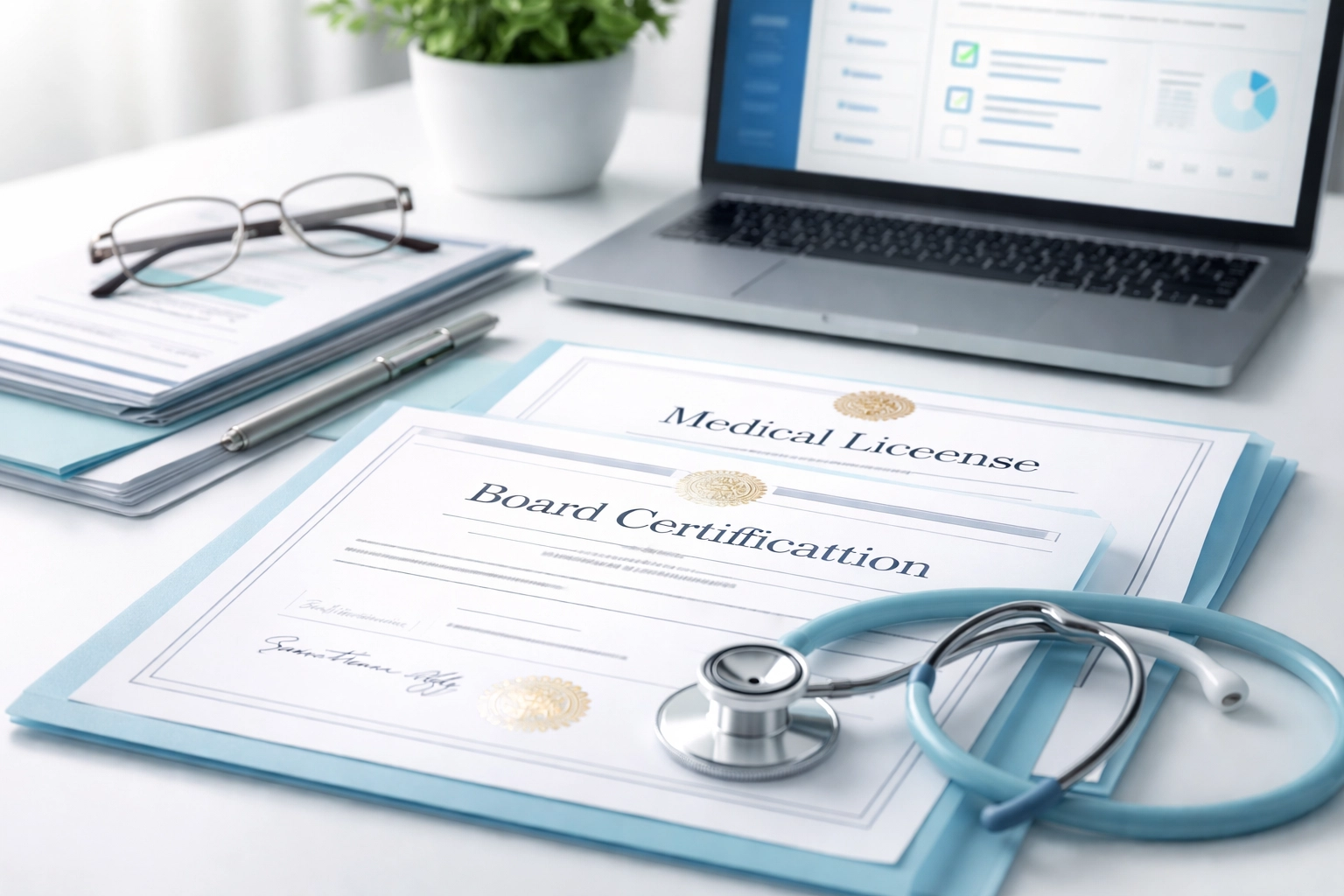
Poorly managed credentialing of visiting physicians represents a major challenge. Facilities often lack standardized processes for verifying licenses, certifications, and privileges. This becomes especially problematic with locum tenens providers or rotating specialists.
Documentation Burden
The accreditation process involves substantial paperwork. Policies, procedures, meeting minutes, quality reports, and incident documentation must be organized and accessible. Many facilities underestimate the time required for documentation preparation.
Quality Improvement Evidence
AAAHC expects ongoing quality improvement activities: not just survey preparation. Facilities must demonstrate consistent performance monitoring throughout the three-year cycle. Organizations that wait until survey time to address quality metrics face significant challenges.
Staff Engagement
Accreditation requires facility-wide commitment. Clinical and administrative staff must understand standards and their roles in compliance. Inconsistent training or staff turnover creates knowledge gaps that surveyors identify.
Policy-Practice Alignment
Surveyors compare written policies against actual practices. Discrepancies between documentation and operations raise concerns. Facilities must ensure policies reflect current workflows and staff follow documented procedures.
Tips for Success in Your AAAHC Accreditation Journey
Implement Robust Credentialing Systems
Create a clear credentialing framework including:
Regular audits of provider files
Standardized application forms
Primary source verification procedures
Partnerships with credentialing verification organizations
Tracking systems for license and certification expirations
Ensure providers maintain proper credentials throughout their tenure at your facility.
Adopt Modern Compliance Solutions
Paper-based systems create unnecessary burden. Digital solutions streamline compliance tracking and reduce administrative overhead. Consider platforms that:
Centralize policy management
Track quality metrics automatically
Generate reports for committee review
Send alerts for expiring credentials or certifications
Maintain audit trails for all documentation

Engage Throughout the Accreditation Cycle
Quality improvement happens daily: not just before surveys. Use AAAHC tools and resources continuously. Maintain readiness throughout the 1,095-day accreditation period rather than scrambling before surveyor visits.
Schedule regular internal audits. Review a different chapter of standards each month. Address deficiencies immediately rather than compiling lists for later correction.
Train Staff Comprehensively
Every team member plays a role in accreditation success. Conduct regular training on:
Relevant AAAHC standards for each department
Emergency procedures and drills
Infection control protocols
Patient rights and safety reporting
Documentation requirements
New hire orientation should include accreditation basics. Annual competency assessments verify ongoing understanding.
Prepare for Mock Surveys
Conduct internal mock surveys at least six months before your accreditation survey. Use the same standards surveyors will assess. Identify gaps and create corrective action plans with assigned responsibilities and deadlines.
Consider engaging external consultants for objective mock survey assessments. Fresh perspectives often identify issues internal teams overlook.
Maintain Open Communication with AAAHC
AAAHC provides resources for accredited and applicant organizations. Take advantage of educational offerings, webinars, and guidance documents. Contact AAAHC directly when questions arise about standards interpretation.
Additional Certification Options
Beyond standard accreditation, AAAHC offers specialized certifications:
Advanced Orthopaedic Certification: Higher recognition for specialty orthopaedic care facilities.
Patient-Centered Medical Home Certification: Demonstrates continuity of care through team-based, comprehensive healthcare delivery.
Accreditation with Dental Home: For primary care organizations serving dental populations.
These certifications build on base accreditation and demonstrate advanced commitment to specific care areas.
Starting Your Accreditation Journey
AAAHC accreditation represents a commitment to excellence. The process requires planning, resources, and organizational dedication. Benefits extend beyond the certificate to improved operations, enhanced reputation, and better patient outcomes.
Healthcare providers apply directly through AAAHC's application process. Allow adequate time for preparation: most facilities benefit from 12-18 months of readiness activities before their initial survey.
This AAAHC accreditation guide provides foundational knowledge for ASC administrators. Implementation requires facility-specific planning based on current operations, resources, and timeline.
For personalized guidance on accreditation readiness, survey preparation, or compliance program development, contact The Mensah Group or book a consultation to discuss your facility's needs.
Comments