
How to Prepare Your ASC for Higher-Acuity Procedures Under the New CMS Rules

The Regulatory Landscape in 2026
CMS 2026 final rule: significant expansion of the ASC Covered Procedures List (CPL). Between 289 and 302 new procedures added, including those previously on the Inpatient-Only (IPO) list.
Five general exclusion criteria eliminated from CPL standards. Shifted to nonbinding physician considerations for patient safety. Greater clinician discretion. Greater ASC accountability.
Bottom line: ASCs now have expanded opportunities: but must demonstrate capability to manage higher-acuity cases safely.
Failure to meet quality reporting requirements results in a 2.0 percentage point payment reduction.
Credentialing and Privileging
Higher-acuity procedures require higher-level credentialing scrutiny.
Core considerations:
Privilege delineation aligned with expanded procedure list
Competency verification for each new procedure type
Case volume thresholds for complex procedures
Proctoring requirements for initial privileging
Ongoing Professional Practice Evaluation (OPPE) metrics updated
Focused Professional Practice Evaluation (FPPE) triggers defined
Governing body responsibility: ensure privileged providers possess documented training, experience, and current competence.
Medical staff bylaws may require revision. Credentialing policies and privilege request forms should reflect new procedure categories.

Anesthesia Services
Higher-acuity = longer procedures, deeper sedation, higher-risk patient profiles.
Key areas:
Anesthesia staffing model evaluation (CRNAs, anesthesiologists, supervision ratios)
Pre-anesthesia assessment protocols for complex cases
Intraoperative monitoring capabilities
Post-anesthesia care unit (PACU) capacity and staffing
Malignant hyperthermia preparedness
Difficult airway management resources
Anesthesia equipment maintenance and calibration schedules
Virtual direct supervision via real-time audio/video now permanently authorized for most outpatient therapeutic and diagnostic services. Consider integration where appropriate.
Patient selection criteria for anesthesia: ASA classification considerations, comorbidity screening, pre-operative optimization protocols.
Infection Control
Complex procedures increase infection risk. Longer operative times. More invasive techniques. Higher-acuity patient populations with potential immunocompromise.
Focus areas:
Surgical site infection (SSI) surveillance expansion
Antibiotic prophylaxis protocols reviewed and updated
Sterile processing capacity assessment
Instrument reprocessing validation for new procedure types
Environmental cleaning protocols for extended procedures
Staff competency verification for infection prevention practices
Annual infection control training compliance
The Mensah Group offers Infection Control Annual Training to support ASC compliance readiness.

Equipment and Facility Requirements
New procedures often demand new equipment. Facility infrastructure may require upgrades.
Assessment checklist:
Specialized surgical equipment for expanded procedures
Imaging capabilities (C-arm, ultrasound, etc.)
Monitoring equipment upgrades
OR table specifications for complex positioning
Lighting adequacy for microsurgical procedures
Power supply redundancy
Medical gas systems capacity
Storage requirements for additional supplies and instruments
Biomedical equipment maintenance schedules: preventive maintenance documentation, calibration records, manufacturer recommendations.
Physical plant considerations: HVAC capacity for extended procedures, air exchange rates, humidity control.
Emergency Preparedness
Higher-acuity = higher risk of emergent complications.
Required elements:
Emergency transfer agreements reviewed and updated
Transfer protocols for complex cases
Code team response procedures
Emergency equipment inventory (crash cart, defibrillator, emergency airway)
Staff training on emergency response
Mock emergency drills documented
Communication systems for rapid response
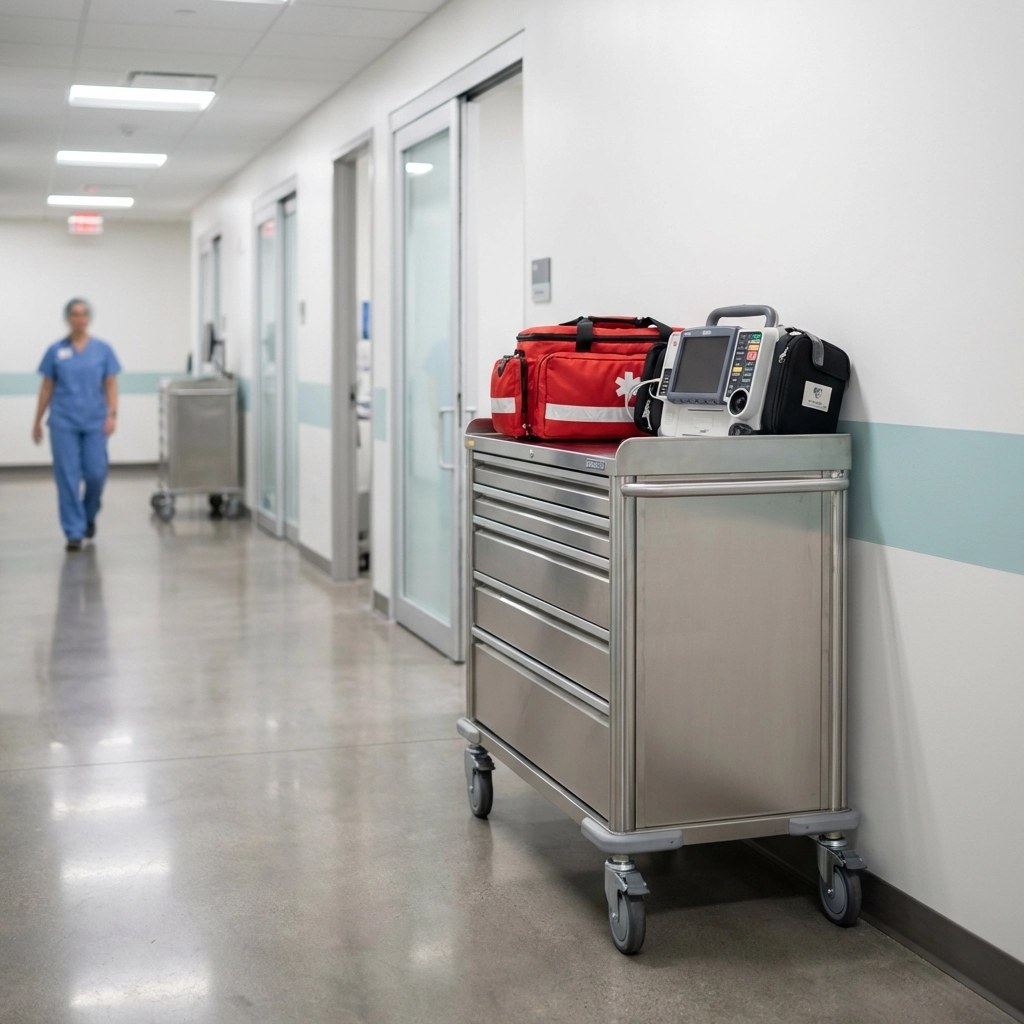
CMS expects ASCs to demonstrate emergency management planning aligned with facility capabilities.
Consider a Comprehensive Emergency Management Plan tailored to your expanded service lines.
Quality Assessment and Performance Improvement (QAPI)
Higher-acuity procedures require robust quality monitoring.
QAPI program enhancements:
Outcome metrics specific to new procedure categories
Complication tracking systems
Patient satisfaction monitoring for complex cases
Return-to-OR rates
Unplanned transfer rates
30-day readmission tracking
Peer review processes for new procedures
CMS quality reporting compliance mandatory. Remote monitoring capabilities and digital patient education tools support care coordination for complex cases.
QAPI committee charter may require revision. Performance improvement project selection should address higher-acuity procedure outcomes.
Data collection systems: ensure capture of procedure-specific metrics. Benchmarking against national standards where available.
Documentation Requirements
Higher-acuity procedures generate more documentation demands.
Documentation priorities:
Pre-operative assessment documentation expanded
Informed consent forms updated for new procedures
Intraoperative documentation requirements
PACU documentation and discharge criteria
Post-operative instructions specific to procedure type
Incident reporting for adverse events
Medical record completion timelines. Authentication requirements. Legibility standards.
Policies and procedures manual: comprehensive review and revision for all affected clinical areas.
Review Risk Management Training options to support documentation compliance.
Commercial Payer Strategy
CMS rule changes often influence commercial payer behavior.
Strategic considerations:
Contract renegotiation for newly approved procedures
Reimbursement rate analysis (ASC procedures typically cost 60% less than HOPD)
Prior authorization requirements for complex cases
Medical necessity documentation standards
Payer-specific coverage policies for expanded procedures
Early engagement with commercial insurers positions ASCs competitively. Payers may follow CMS lead in shifting certain surgeries to outpatient setting.

Implementation Timeline
Structured approach recommended.
Phase 1: Assessment
Gap analysis of current capabilities vs. expanded procedure requirements
Resource inventory
Staff competency evaluation
Phase 2: Planning
Policy and procedure revision
Equipment acquisition timeline
Training schedule development
Budget allocation
Phase 3: Implementation
Staff training completion
Equipment installation and validation
Policy rollout
Documentation system updates
Phase 4: Monitoring
QAPI metrics tracking
Compliance auditing
Performance improvement cycles
Survey Readiness
Expanded services increase survey scrutiny.
Surveyors will assess:
Governing body oversight of expanded services
Medical staff credentialing for new procedures
Infection control program adequacy
Emergency preparedness for higher-acuity complications
QAPI program scope
Patient rights and informed consent processes
Physical environment suitability
A Facility Mock Survey identifies gaps before regulatory review.
Next Steps
Preparation for higher-acuity procedures under CMS 2026 rules requires systematic evaluation across multiple operational domains.
Each ASC's readiness profile differs based on:
Current procedure mix
Planned service line expansion
Existing infrastructure
Staff competencies
Geographic market factors
Professional consulting support helps identify specific gaps and develop tailored implementation strategies.
Schedule an Initial Consultation with The Mensah Group to assess your ASC's readiness for higher-acuity procedures.
For additional resources on ASC compliance and operations, visit our Ambulatory Surgery Center page.
Comments